

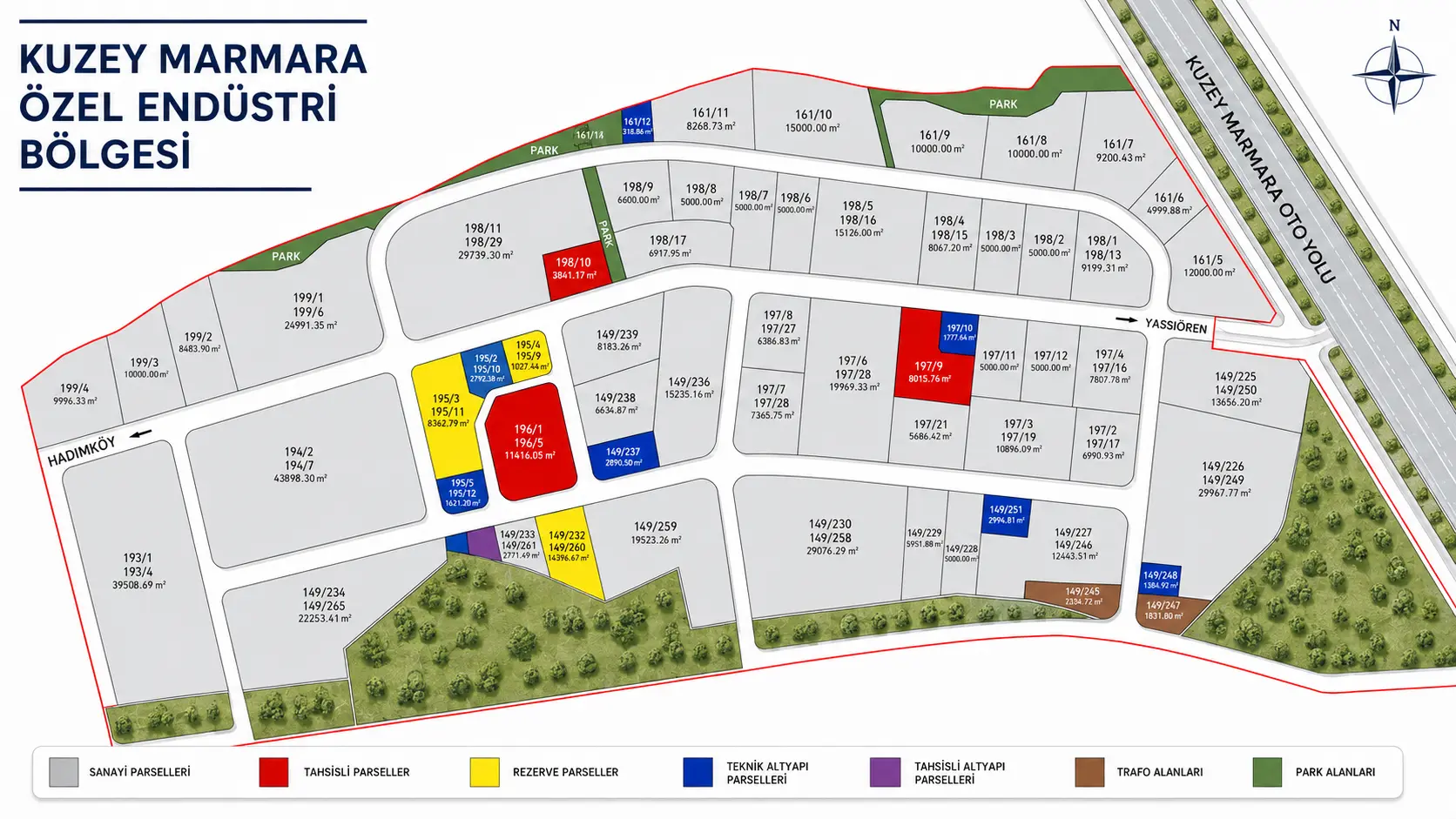
01
1. Write the investment brief before searching
Start by defining the intended activity. Production flow, storage, inbound materials, dispatch, people and technical rooms determine what the land must actually accommodate.
Document both today’s operation and a growth scenario. This makes it possible to judge the plot by the full operating flow rather than land area alone.
- Activity, product, machinery and process requirements
- Vehicle, loading, external-area and yard-flow programme
- Phased growth, additional buildings and technical-space needs
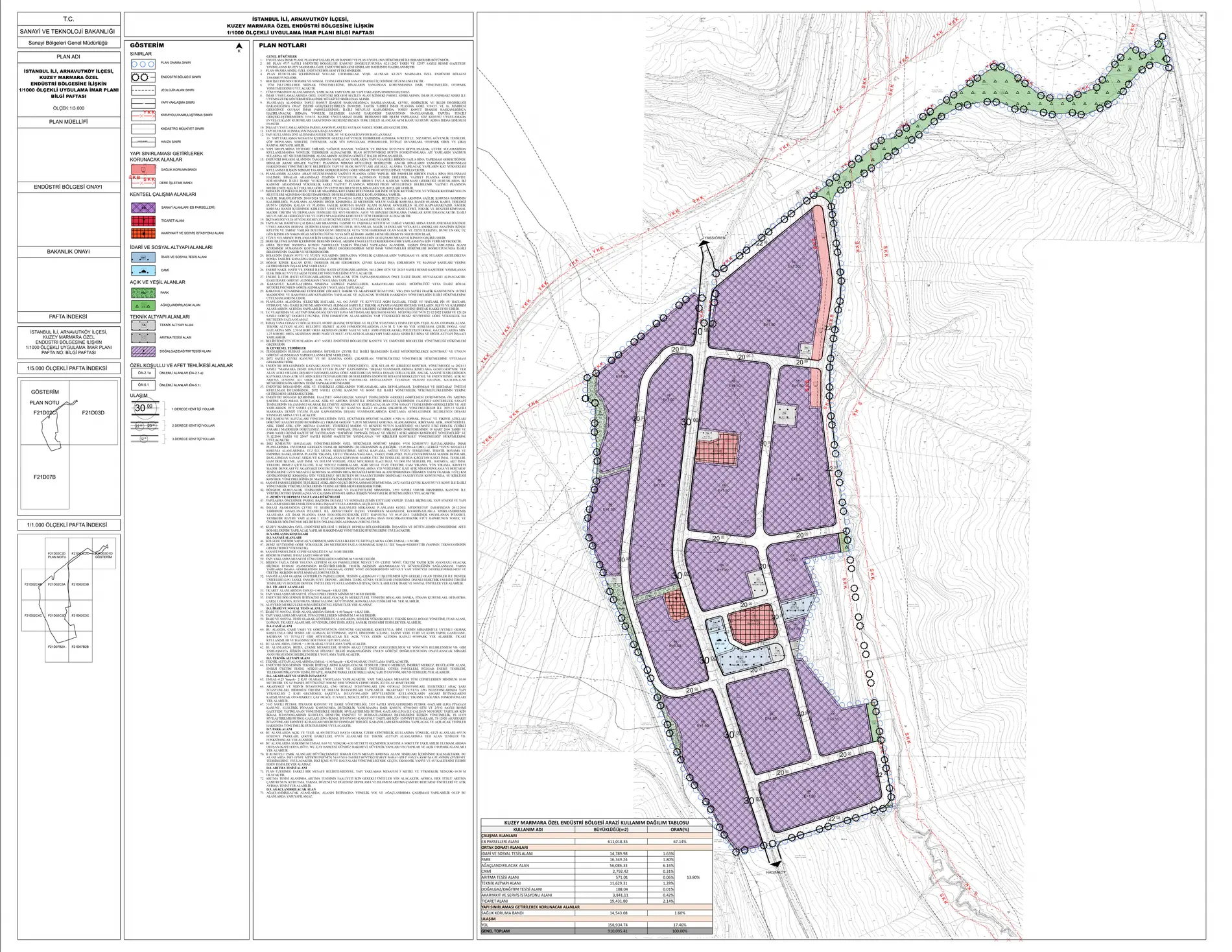
02
2. Review title, planning and planning notes together
Title records, restrictions, access and parcel boundaries should not be reviewed separately from planning. Permitted use, development conditions and project-specific authorities must be confirmed with the competent bodies using current documentation.
Planning notes can be as decisive as a floor-area ratio. Access, shared areas, utilities, fire, environmental and implementation conditions can directly affect the investment case.
- Verification of title, restrictions, access rights and boundaries
- Review of permitted use, planning legend and implementation notes
- Written confirmation of permits, licences and operating conditions from the competent authorities
03
3. Do not mistake FAR for usable site capacity
A floor-area ratio or gross development entitlement does not automatically translate into usable operational area. Plot shape, setbacks, level changes, fire routes, plant rooms, parking and vehicle circulation can materially reduce the buildable layout.
An early architectural and technical feasibility study makes the usable configuration visible before a decision is made for a factory, warehouse or data centre.
- Setbacks, geometry, topography and service roads
- Loading yard, fire access, technical rooms and staff areas
04
4. Confirm utilities in writing rather than assuming them
Power, water, wastewater, gas, fibre, fire water and telecom requirements are specific to each investment. An existing line or regional infrastructure does not by itself mean that the required connection and capacity are available.
Once demand and phasing are defined, the connection route and technical conditions should be reviewed in writing with the relevant providers and authorities for the particular project.
- Power demand, resilience approach and connection conditions
- Water, wastewater, drainage, fire and process requirements
- Fibre routes, telecom access and technology infrastructure
05
5. Keep inspection, feasibility and contract in one decision chain
Desk research is only the first filter. A site visit reveals adjacency, slope, access, yard organisation, existing structures and environmental conditions in the context of the operating brief.
For land sales, project development and business-development decisions, technical, commercial and legal review should remain connected. Delivery, investigation, conditions, responsibilities and exit provisions should be clarified by the relevant advisers.
- On-site technical review and interdisciplinary pre-feasibility
+
Related investment solutions
+