

01
Do not mistake connected load for real demand
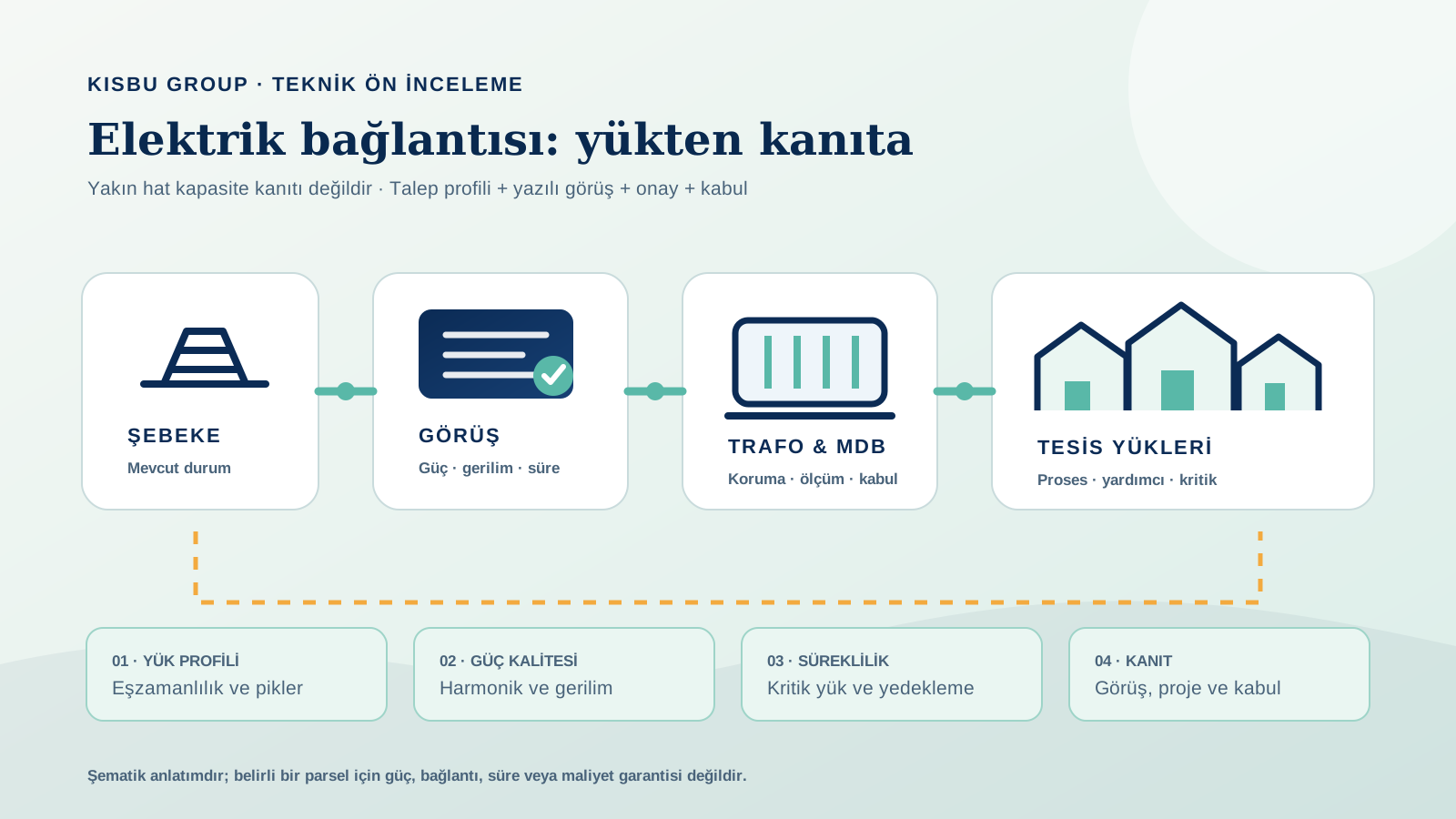
The sum of equipment nameplates is an input, not the operating demand. Production sequence, motor starting, furnace or compressor cycles, charging, HVAC and shift changes should be mapped over time.
Separate connected load, coincident demand, short peaks, daily energy and future phases. Make every assumption traceable to the equipment list, vendor data, measurement or specialist calculation.
- Process and utility load list
- Illustrative 15- or 30-minute operating profile
- Starting, cycling and shift-related peaks
- Clear separation of first phase and growth
02
Define continuity and power quality together
Equal kilowatt values do not mean equal electrical requirements. Outage tolerance, restart time and safe shutdown for critical processes affect the resilience architecture and single-line design.
Variable-speed drives, welding, furnaces, UPS systems and electronic loads may require checks for harmonics, voltage dips, reactive power and rapid load variation. The objective is to identify the measurements and studies the design team must verify.
- Critical, safety and deferrable load classes
- Outage tolerance and controlled shutdown sequence
- Harmonics, power factor and voltage sensitivity
- Purpose and boundary of UPS, generation or storage
03
Define the evidence expected from the connection opinion
EPDK’s current guidance explains that whether a request can be met, and under what conditions, is determined through the application and network assessment. The opinion may address expected timing, voltage level, required assets, responsibilities and an indicative connection charge.
Do not use a nearby pole, cable or transformer as proof of capacity. Apply to the competent distribution or transmission party with the correct demand profile and track the point, power, conditions, programme and responsibilities in current written records.
- Competent applicant and point of use
- Requested power, voltage and phasing
- Connection point and ownership/operating boundary
- Required assets, responsibilities and indicative programme
04
Manage connection through design, acceptance and energisation
A positive early view does not mean the facility is ready to energise. Single-line diagrams, protection coordination, metering, earthing, switch rooms and cable routes require competent engineering and approvals.
TEDAŞ’s project approval and acceptance information emphasises acceptance against the approved design and applicable rules. Keep design inputs, approval, construction, testing, acceptance and energisation in one evidence chain, verifying each party’s scope for the specific project.
- Approved single-line and protection philosophy
- Metering, earthing and switch-room requirements
- Factory and site acceptance tests
- Approval, acceptance and energisation close-out
05
Close the land decision with a phased evidence matrix
For each candidate, record the need, evidence, open issue, owner, deadline and investment effect. Replace ‘power is available’ with the power, date, conditions and document reviewed. Include efficiency and submetering in the first design so operating data can test assumptions.
This guide makes no claim about power, connection, timing or cost for any plot. KISBU Group develops its own real estate; it is not the administration or official website of the North Marmara Special Industrial Zone. Competent authorities must verify connection and project status.
- Demand: measurable load and continuity need
- Evidence: formal opinion, approved design, measurement or test
- Status: verified, conditional, open or unsuitable
- Action: owner, date and decision effect
+
Related investment solutions
+