

01
Build the water balance from process steps
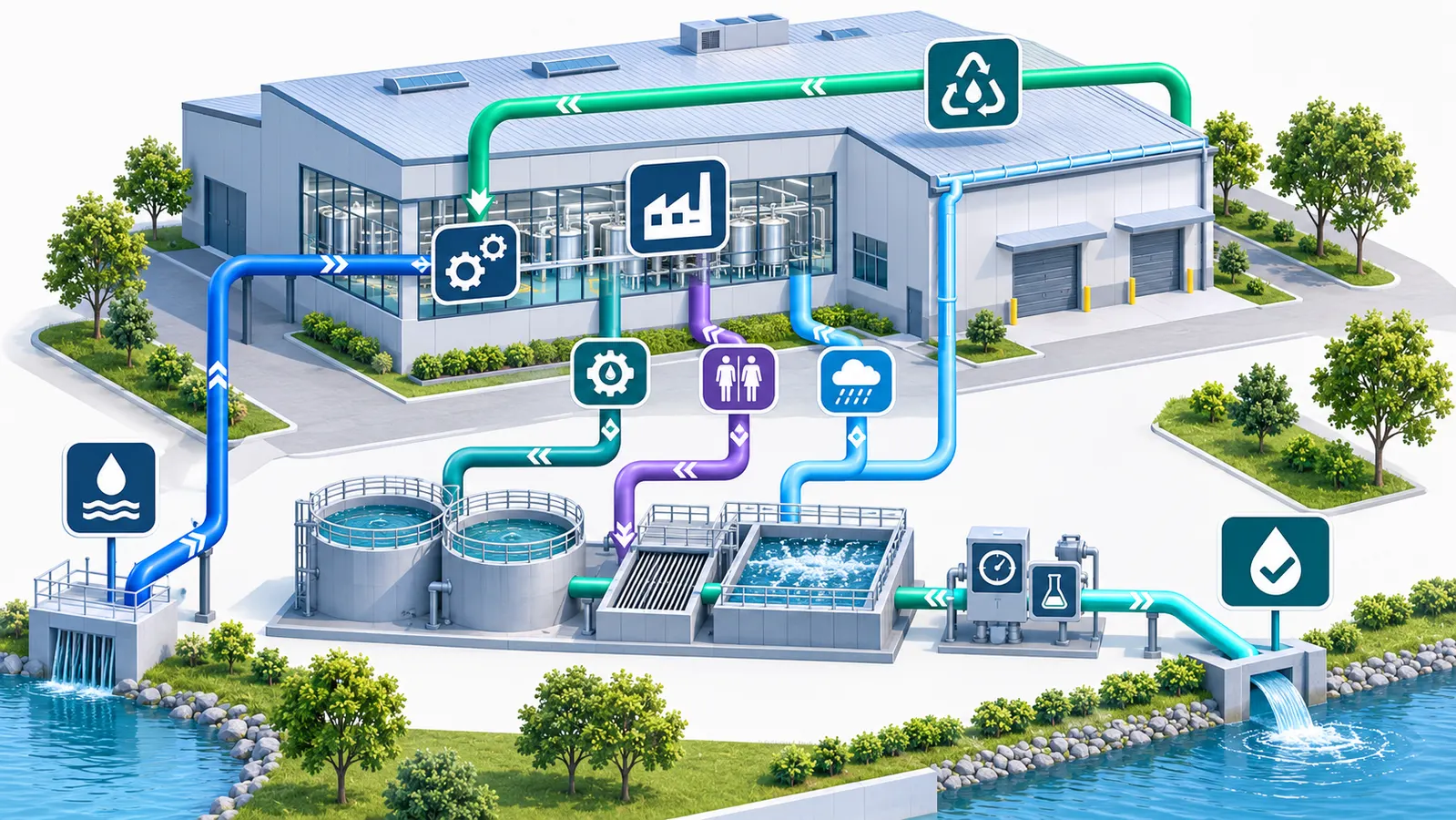
Map where water goes instead of guessing one total. Supply, process, cleaning, cooling, steam, welfare use, water retained in product, evaporation, reuse and discharge belong in one mass balance.
Average demand is insufficient. Shifts, changeovers, cleaning, commissioning and seasonality can alter peak flow and quality. Record how each assumption will be verified by measurement, vendor data, records or specialist calculation.
- Source, use point and required quality
- Average, peak and intermittent demand
- Product, evaporation, reuse and discharge
- First phase and growth scenario
02
Segregate streams at source
Process wastewater, sanitary sewage, utility drainage and clean stormwater do not share acceptance conditions. Mixing them can enlarge treatment load and obscure representative sampling.
IFC guidance calls for understanding sources, flow, frequency and internal drains, and for appropriate segregation of process, utility, sanitary and stormwater streams. Confirm levels, backflow and emergency containment.
- Process, sanitary, stormwater and clean drains
- Continuous, batch and accidental flows
- Clean and potentially contaminated runoff
- Backflow, overflow and containment
03
Write the characterisation and sampling plan
Temperature, pH, suspended solids, oil, salinity, organic load and process-specific chemicals may matter as much as flow. Derive parameters from the activity and materials rather than copying a generic list.
Define sampling location, operating state, frequency and method before testing. Variable production may need representative periods rather than one sample; competent laboratories and specialists should analyse and interpret the evidence.
- Pollutants and variability by stream
- Sampling point, method and frequency
- Peak production, cleaning and changeover
- Uncertainty and further verification
04
Verify discharge and reuse in writing
Sewer discharge, direct discharge and reuse follow different routes. Obtain project-specific written confirmation of limits, connection point, flow, pretreatment, permits and monitoring duties from the competent authority.
Reuse is feasible only when achieved quality suits the end use. EU BAT sources support reduction, segregation and recovery, but do not replace Turkish project approvals. Current national rules, authority views and process-supplier requirements govern.
- Authority and current acceptance limits
- Connection/discharge point and ownership boundary
- Pretreatment, equalisation and emergency storage
- End use, quality and monitoring
05
Close the decision with an evidence matrix
Record the document, owner, deadline and investment effect for every open point. Keep the process flow, water balance, sampling plan, authority view, connection condition, pretreatment basis and operating plan in one traceable file.
This guide makes no capacity, connection or discharge claim for any plot. KISBU Group develops its own real estate; it is not the administration or official website of the North Marmara Special Industrial Zone. Authorities must verify decisions.
- Question and decision effect
- Evidence: measurement, analysis, calculation, design or formal view
- Status: verified, conditional, open or unsuitable
- Action: owner, date and design/budget effect
+
Related investment solutions
+