

01
Read the load profile before counting modules
Start with interval data rather than one annual consumption figure. Shifts, weekends, seasonal variation, simultaneous demand, shutdowns and planned machinery belong on the same load curve. The overlap between generation and demand shapes the electrical concept.
Record the source, measurement period and missing data for every scenario. Show estimated generation and self-consumption separately; do not promise capacity, settlement results or savings without a verified model and project-specific grid opinion.
- Data representing a complete operating cycle
- Shift, weekend, shutdown and seasonal effects
- Critical loads and planned equipment
- Separate self-consumption, grid interaction and uncertainty
02
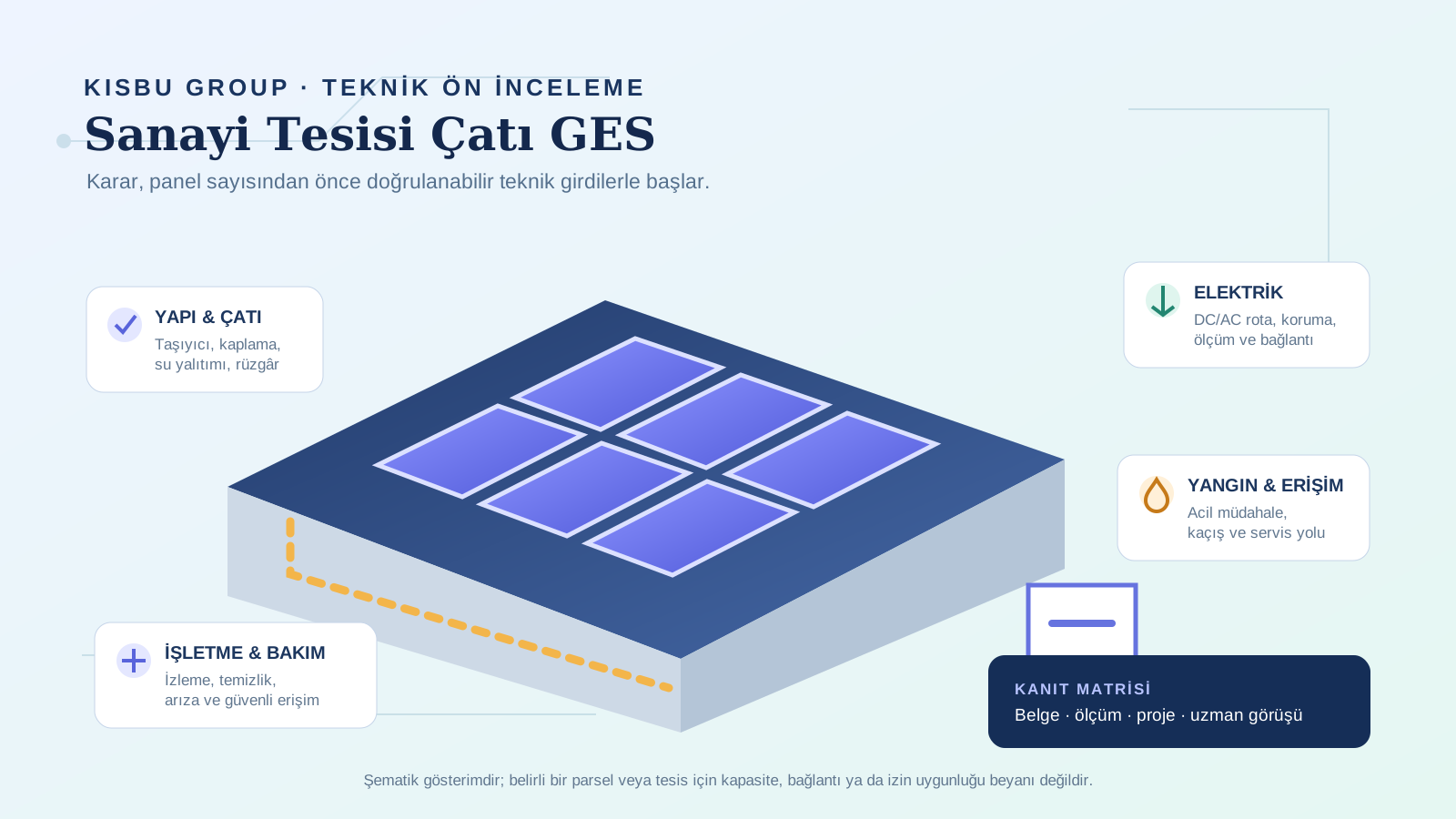
Treat the roof as a working structural system
Usable area is not empty space traced from an aerial image. Structure, cladding, corrosion, connections, waterproofing, slope, drainage, shading, wind and snow require coordinated specialist review. Module, mounting, cable and service loads must be compared with verified capacity.
If the roof covering's remaining life does not align with the PV operating horizon, future removal and reinstatement become material risks. Structural review, renewal, watertight detailing and warranty responsibility should therefore share one pre-investment programme.
- Approved drawings, survey and structural review
- Cladding age, corrosion, waterproofing and drainage
- Wind, snow, permanent and maintenance loads
- Openings, shading and safe working zones
03
Draw the electrical architecture to the metering point
Cable routes, inverter locations, DC and AC isolation, earthing, lightning protection, protection coordination, switchboards and transformer interfaces matter as much as module layout. Distance, temperature, access and available panel space affect losses and safety.
EPDK publishes the applicable unlicensed-generation framework, application documents, connection and use agreements and settlement rules. The team should verify the current text, the network operator's project-specific position and the consumption site's metering arrangement before treating a connection as available.
- Single-line diagram, cable routes and inverter locations
- Earthing, lightning and protection coordination
- Switchboard, transformer, metering and power quality
- Authority correspondence, application status and open conditions
04
Resolve fire response and maintenance access together
Rooftop equipment introduces live electrical components and work-at-height risks. IEA PVPS guidance highlights shock, arcing, slips, falls and roof behaviour as issues to consider from both firefighter and maintenance perspectives.
Fire compartments, escape and response routes, smoke systems, roof hatches and the facility's existing fire strategy cannot be separated from module layout. Labels, isolation, access corridors and responsibilities require project-specific validation.
- Fire compartments and emergency routes
- Safe access and fall protection
- Labels, isolation points and emergency information
- Roles and communication for maintenance and response teams
05
Make operation and maintenance a design input
Long-term performance depends on monitoring quality, alarms, thermal inspections, connection checks, cleaning decisions, spares and safe service access. IEA PVPS recommends adapting O&M to climate and site conditions while tracking performance, safety and reliability together.
Cleaning frequency should not be copied from a generic calendar. Base it on soiling, rain, environmental conditions, water use, lost output and safe access. Contracts should define warranties, data ownership and maintenance duties.
- Monitoring, alarms and fault classification
- Thermal and connection inspections
- Climate- and soiling-based cleaning
- Warranties, spares, data access and service levels
06
Close the decision with current documents and an evidence matrix
Türkiye's Ministry of Energy published an implementation guide on 24 August 2026 following the 24 July 2026 zoning and permit regulation for wind and solar facilities. A permit checklist should therefore be revalidated against current rules and competent-authority opinions for each project.
Give every requirement a target, evidence, owner, status and closure date. Keep undocumented structural capacity, connection, permit, fire or generation assumptions open. KISBU Group undertakes land sales, project and business development on its own real estate; it is not the administration or official website of the North Marmara Special Industrial Zone.
- Requirement and acceptance criterion
- Approved document, measurement, design or specialist report
- Verified, conditional, open or unsuitable
- Owner, closure date and decision impact
+
Related investment solutions
+